

Navvāṅ Punjābi Fiction
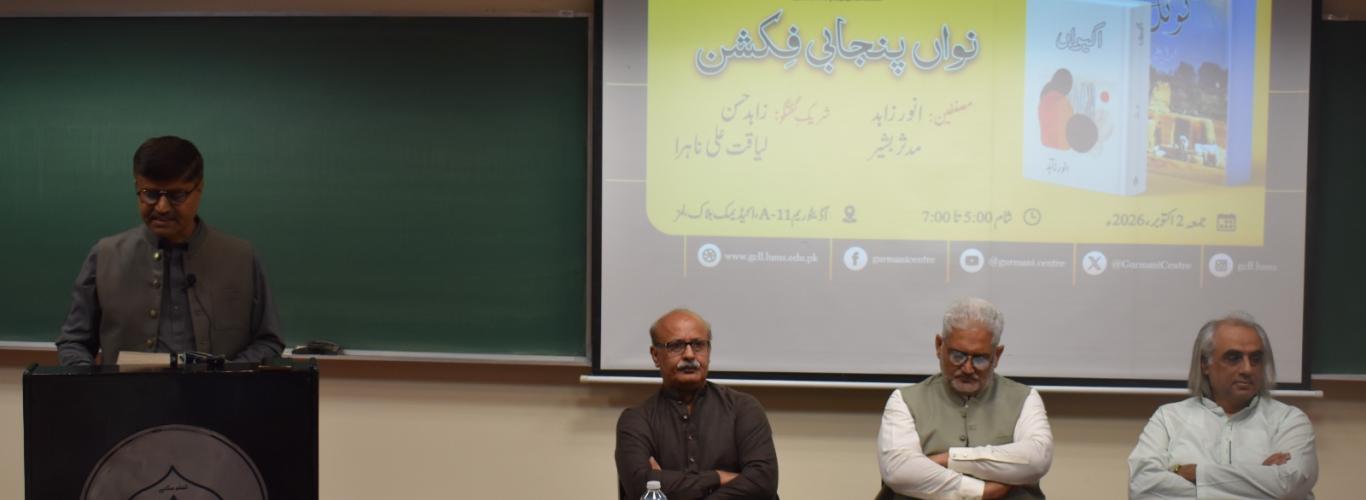


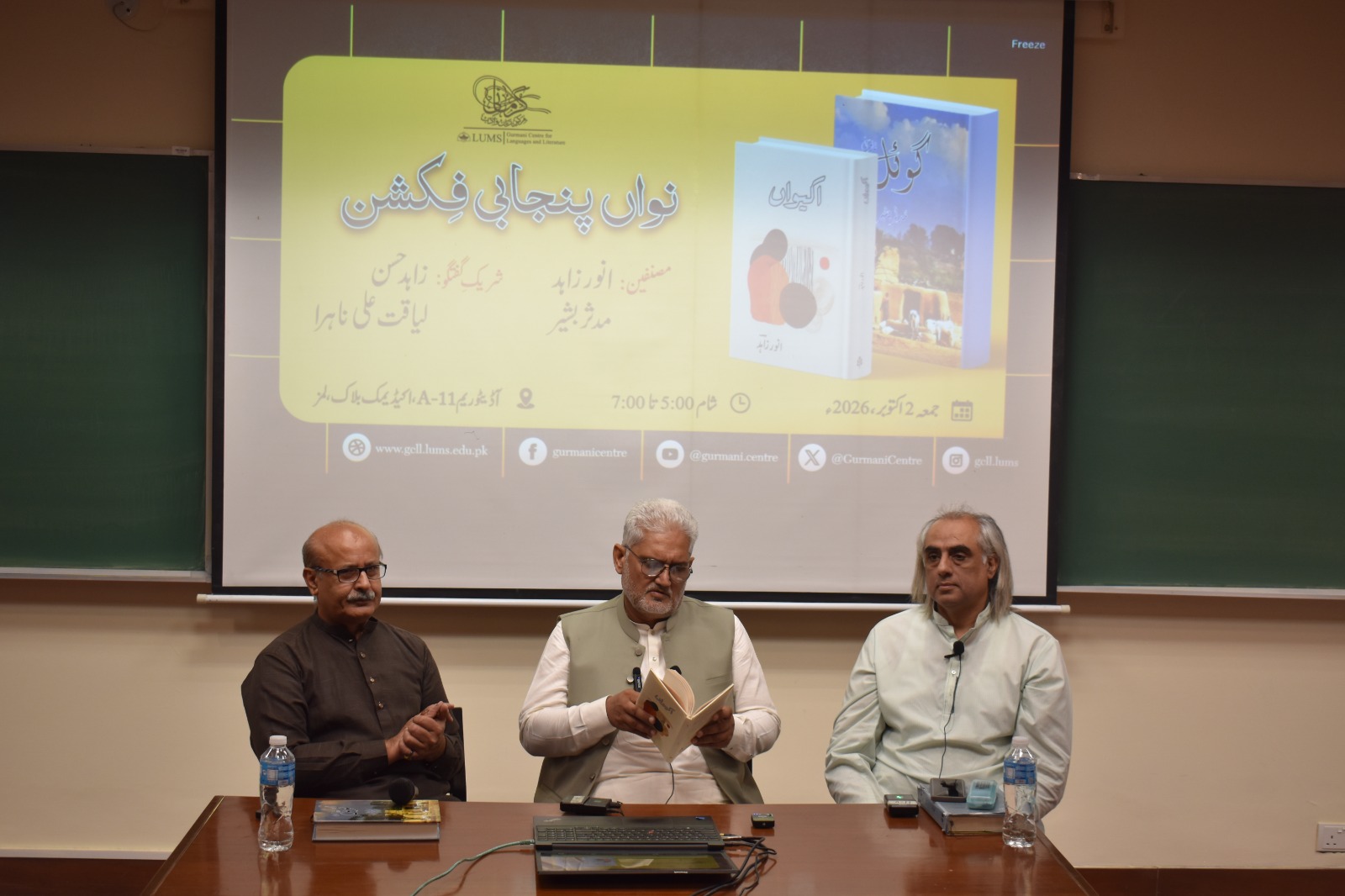
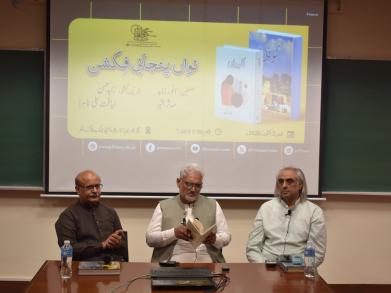
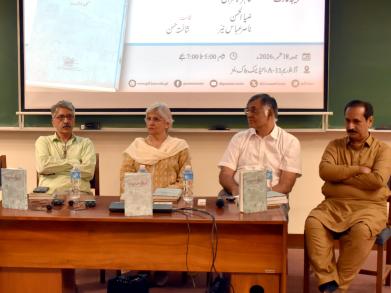
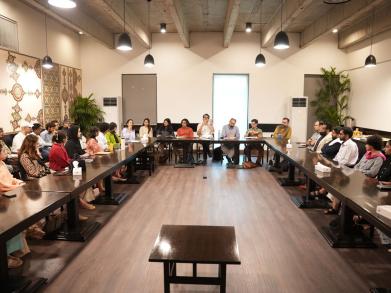
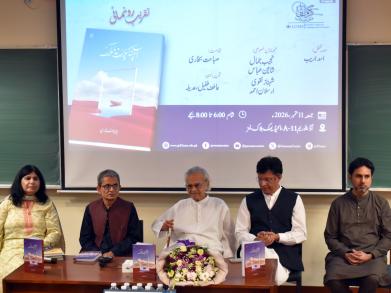
The Gurmani Centre for Languages and Literature, LUMS, hosted a literary session titled Navvāṅ Punjābi Fiction. The event brought together writers and critics to explore the creative evolution of modern Punjabi Fiction, focusing on Anwar Zahid’s short story collection, Akīvāṅ, and Mudassar Bashir’s novel, Go’īl.
Zahid Hasan opened the session by noticing that fiction is vital to "keeping a language awake." He critically examined the reciprocal relationship between narrative and fact, discussing how history is often fictionalized and fiction historicized. Praising Anwar Zahid’s mastery of the art of storytelling in Akīvāṅ, Hasan suggested that a complete Punjabi linguistic encyclopedia could be constructed solely from the vocabulary within Zahid's works. Furthermore, he highlighted the text's underlying ecological perspectives, linking themes of climate change and the environment directly to the revival of Punjabi identity.
The critical analysis continued with Liaqat Ali Nahra’s deep dive into Mudassar Bashir’s novel, Go’īl. Utilizing both a psychological and historical lens, Nahra explored the characters' profound sense of rootlessness and their nostalgic urge for the past. He emphasized how the novel makes readers acutely aware of regional politics and the enduring, generational impacts of Partition.
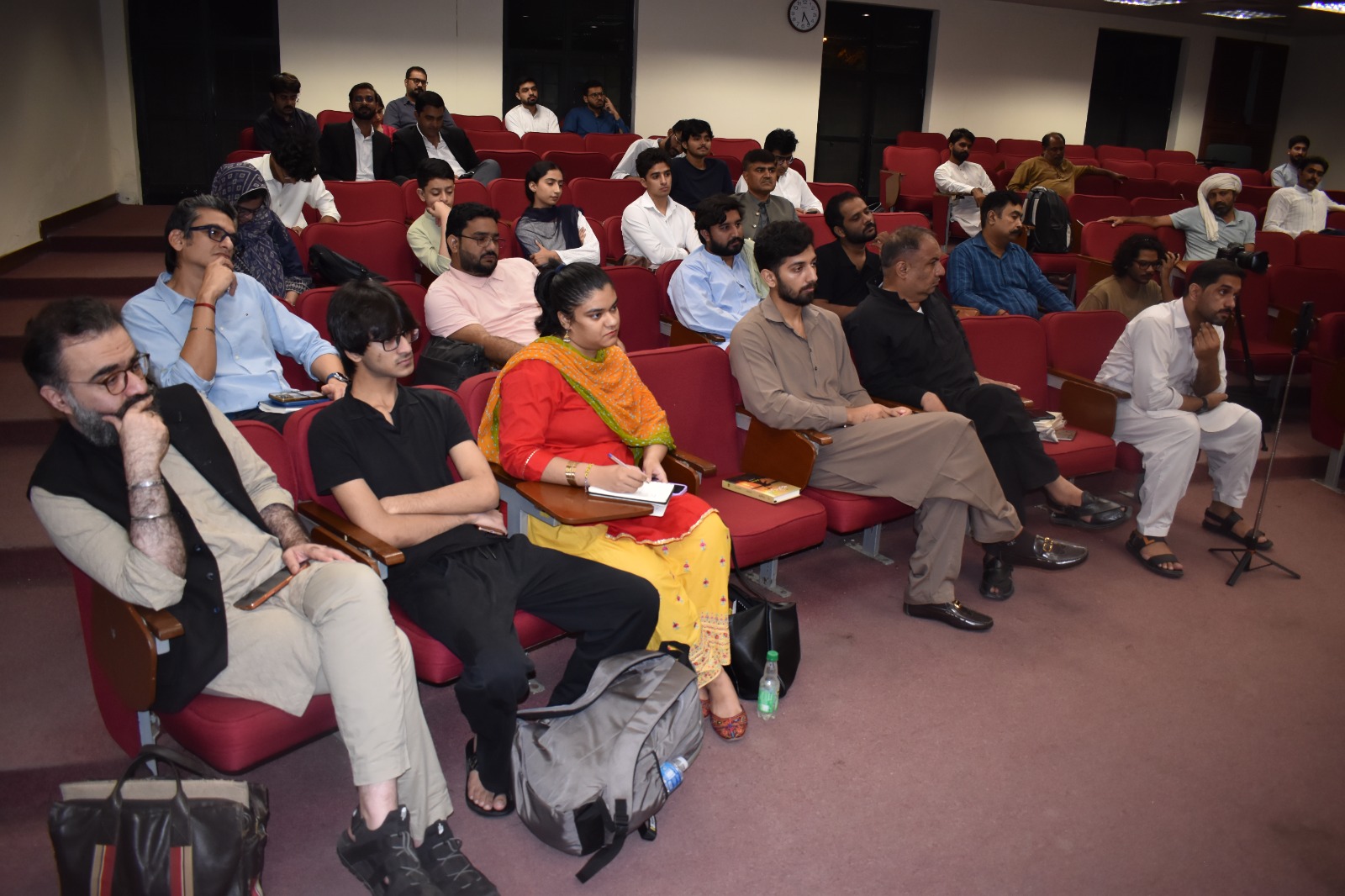
The event concluded with a panel discussion where Anwar Zahid shared his personal approach to writing. He explained that he doesn't view fiction as mere craftsmanship; his writing process originates organically from his personal and familial background. He explained his use of heavy symbolism, including superstitions and spirits, to critique societal corruption and allow readers to "relive every experience our predecessors went through."
Mudasir Bashir talked about the creative process, affirming that the mother tongue inherently reveals the path for storytelling. The session concluded with an agreement among the speakers: documenting and writing upon the cultural and historical landscape of Lahore is not just an artistic choice, but a fundamental duty of the Punjabi writer.