

Book Launch "Janūb Ā’shiyā’ī Musalmānōṅ kī Gharb Shināsī"
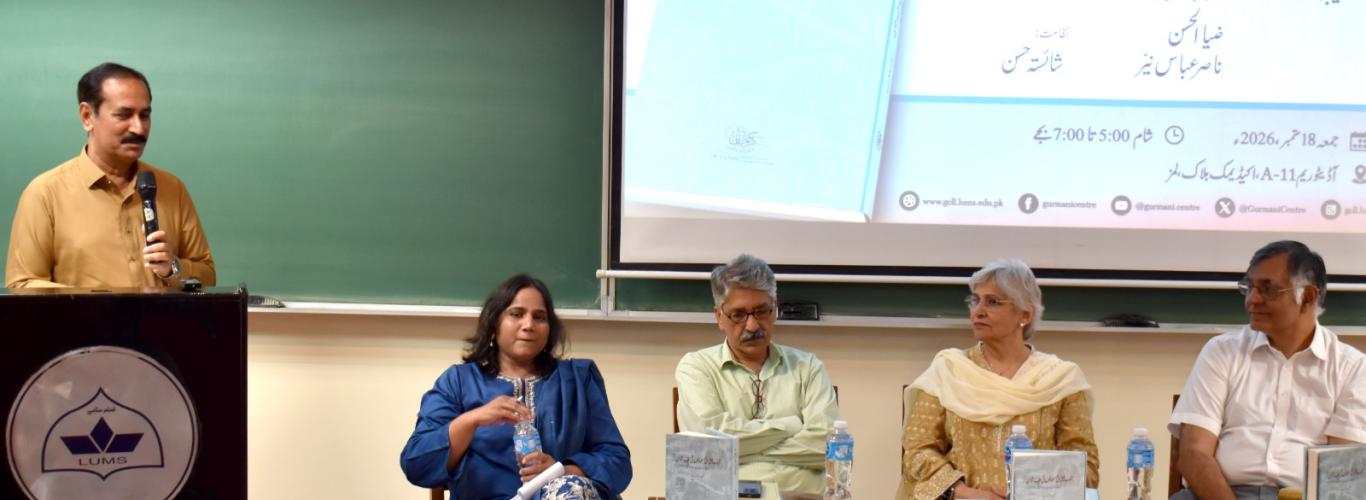


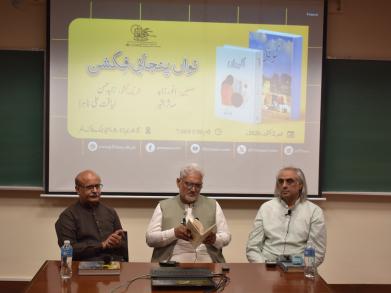
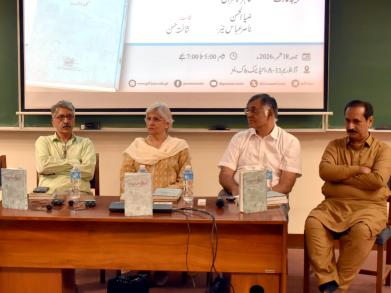
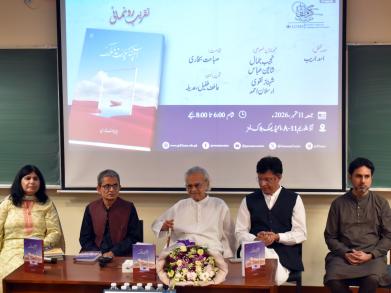
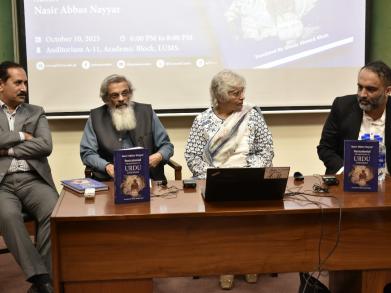
The Gurmani Centre for Languages and Literature, LUMS, hosted the launch of Janūb Ā’shiyā’ī Musalmānōṅ kī Gharb Shināsī: Nau-ābādiyātī 'Ahd meṅ Yūrap kē Safarnāme, by Dr. Najeeba Arif, recently published by GCLL, LUMS. The discussion approached the book from several interconnected perspectives: its archival methodology, its treatment of eighteenth-century encounters with Europe, the intellectual possibilities of Occidentalism, and the question of how scholars might move beyond inherited East-West binaries.
Dr. Shaista Hasan introduced the panel and formally began the event. Following the introduction, Dr. Nayyar situated the book within contemporary postcolonial research in Urdu, emphasizing its contribution to research in Occidentalism. He also noted that it is one of the few Urdu research projects based on archival research. Dr. Zia ul Hassan opened his remarks by discussing Arif's prose style. He drew attention to the selection of an eighteenth-century corpus and the readability of a study grounded in extensive research. He noted that the book offers a window into the epistemological and technological transformations of the period and depicts how South Asian travelers perceived these developments.
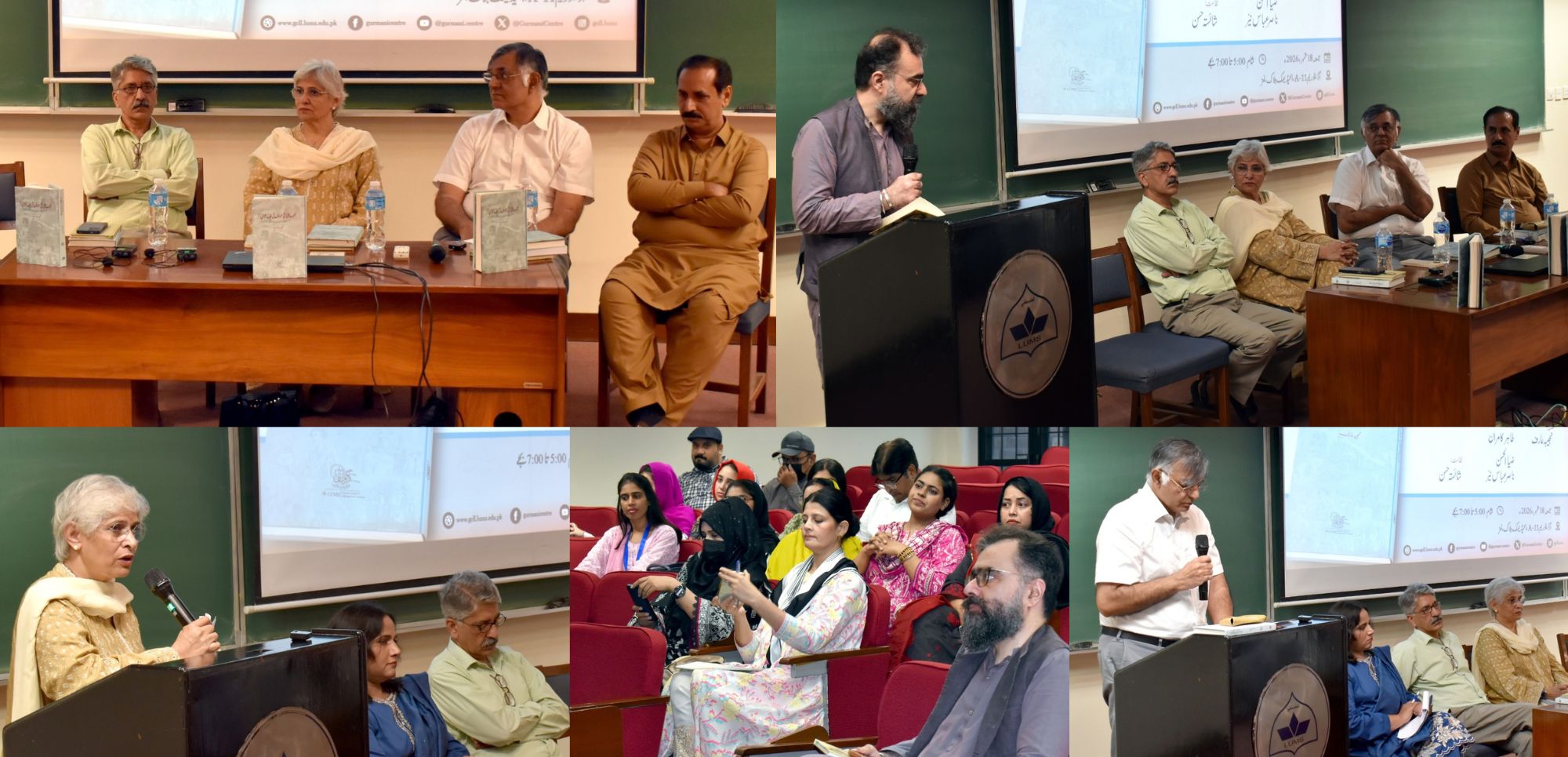
Dr. Tahir Kamran emphasized the importance of Occidentalism in contemporary scholarship while raising questions about the possibility of studying the West from a position shaped by unequal intellectual and economic relations. Emphasizing the role of the humanities, he called for intellectual resistance beyond “safe scholarship” and for challenging colonial binaries in the pursuit of a modernity freed from the constraints of Western modernity.
The author, Dr. Najeeba Arif, presented the book’s central argument by challenging traditional narratives surrounding Orientalism and Occidentalism. She argued that just as the West has historically defined the East, scholars from the East have also tried to offer a réplique in their representations of the West. For her, Occidentalism is a potential space for dialogue and mutual understanding rather than merely a negative or reactionary critique. She called for a move beyond the one-sided “margin and center” dynamic and the rigid East-West binary. Dr. Ali Usman Qasmi further situated these questions within the unequal power relationship historically constructed between the imagined categories of East and West, arguing for decentering of the West and greater attention to intra-Asian intellectual histories to understand how diverse Asian cultures historically engaged with one another.
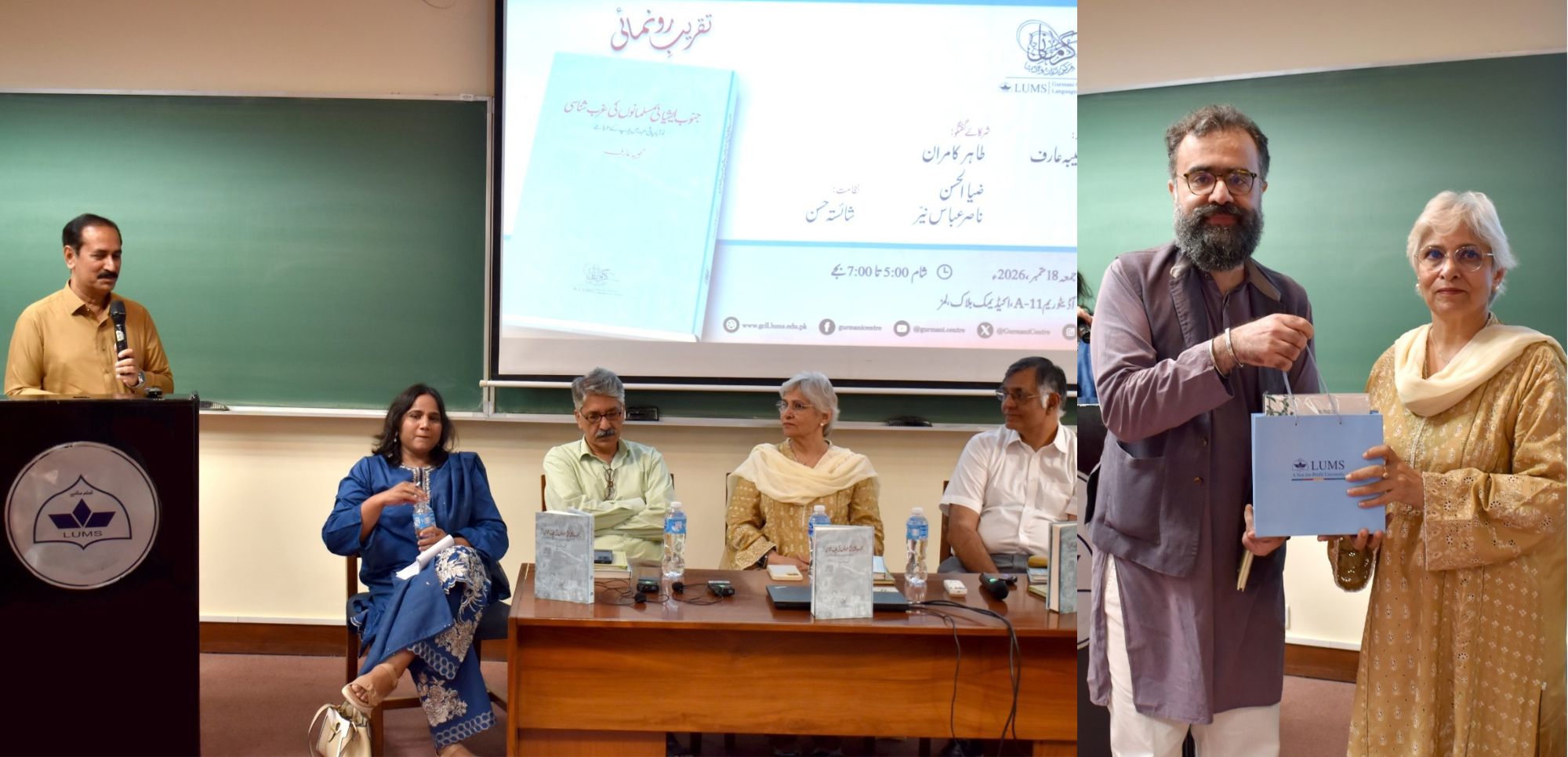
The discussion thus situated Arif’s study within wider debates on how South Asian intellectuals encountered, represented, and interpreted Europe, while raising broader questions about the production of knowledge across unequal cultural and political relationships.