

Multilingualism, Bio-culturalism, and Neoliberalism


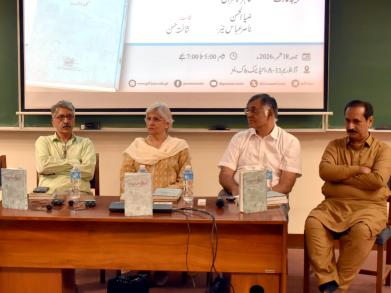
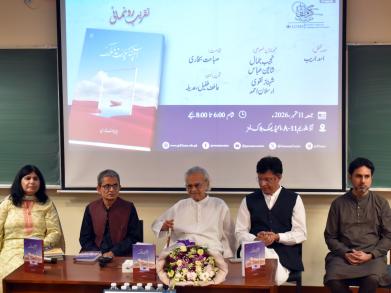
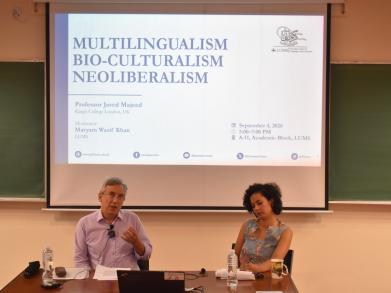
The Gurmani Centre for Languages and Literature organized a talk titled Multilingualism, Bio-culturalism, and Neoliberalism, focusing on the intersections of language, citizenship, and identity in India. The session featured Dr. Javed Majeed, Professor of English and Comparative Literature at King's College London, and was moderated by Dr. Maryam Wasif Khan, a literary historian and faculty member in the CLCA program at LUMS. The discussion examined language as a deeply politicized marker of bio-cultural belonging.
Dr. Majeed commenced by challenging the linguistic cartography of postcolonial India, which had anchored fluid languages to rigid geographic territories. He argued that the colonial linguistic maps were, ironically, more attuned to the linguistic messiness of India. Consequently, this territorial mapping facilitated the rise of genetic nationalism, a framework in which biological and cultural identities fuse and caste is racialized. This ideological shift reinstates a 'sacred aura of whiteness,' whereby closer proximity to whiteness grants greater perceived authenticity.

Central to this genetic nationalism is the concept of the mother tongue. Drawing on Yasmine Yildiz's work, Majeed noted that at the heart of this concept lies a gendered and biologically charged form of kinship, in which languages are imagined as maternal figures requiring patriarchal protection. This framing casts such languages as rooted and authentic, in contrast to the perceived rootlessness of English. Beyond this cultural dimension, Majeed also underscored the contradictions of language under neoliberalism, noting that it functions simultaneously as a communal symbol and a sought-after economic asset; “pride in language and profiting from language go hand in hand.”

In the discussion that followed, Dr. Khan asked what a Muslim parallel to this genetic nationalism might look like. In response, Majeed proposed the idea of a ‘Muslim linguistic cosmopolitanism,’ a figure who navigates the world without requiring rooted, genetic authenticity. Dr. Khan noted that this figure stands as the direct opposite of the genetic nationalism discussed earlier.

The session concluded with an audience Q&A that grounded these theories in the Pakistani reality. Responding to an audience question regarding the economic marginalization of regional languages relative to Urdu, Dr. Majeed reframed the perceived messiness of Pakistani multilingualism not as a defect, but as a matter of language justice. Drawing together comparative literature, political economy, and linguistic history, the session underscored the urgent need to critically reassess how language policy shapes citizenship today.