


to
MCB (A 13) Auditorium, Academic Block, LUMS
fahid.ahmad@lums.edu.pk
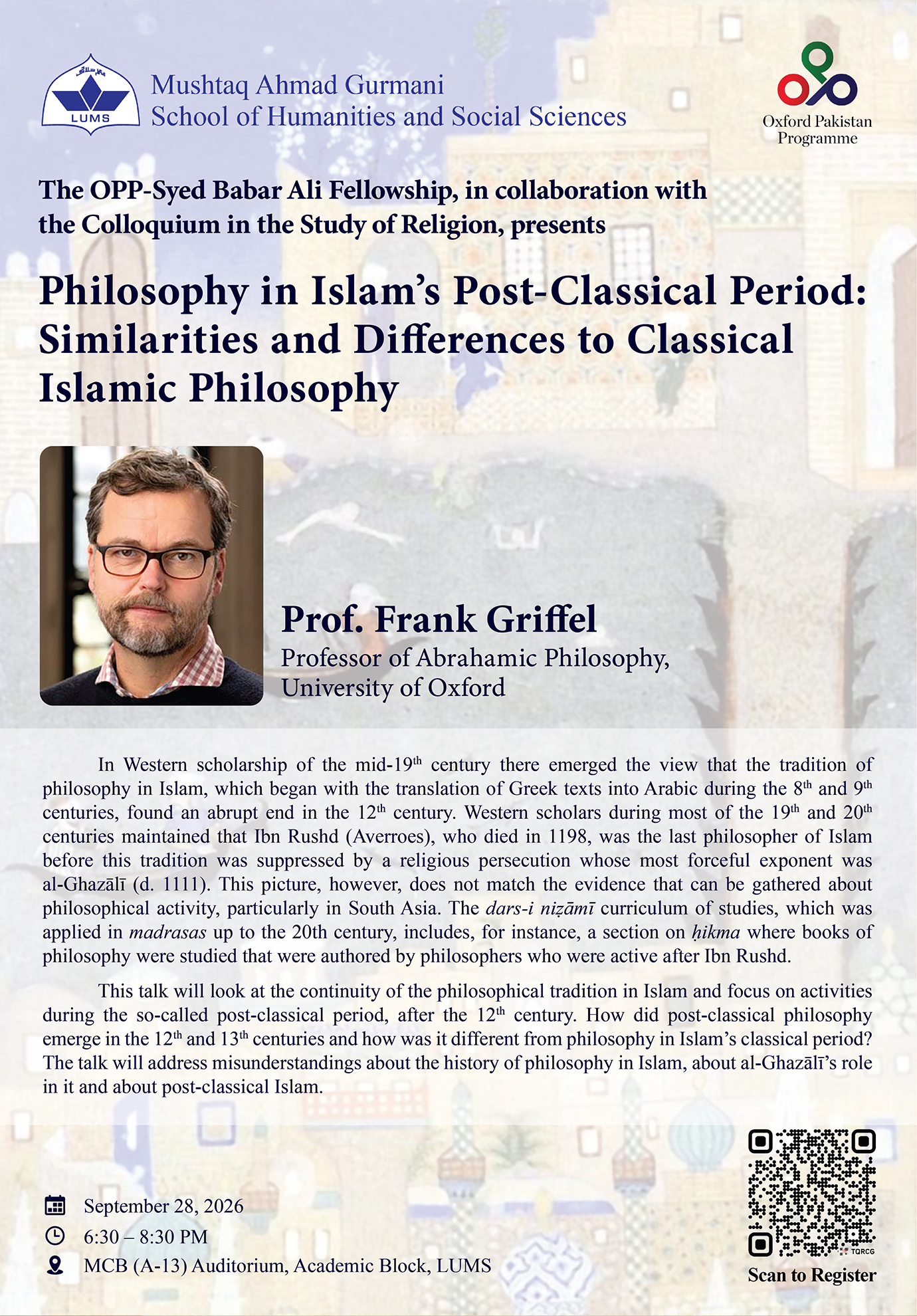
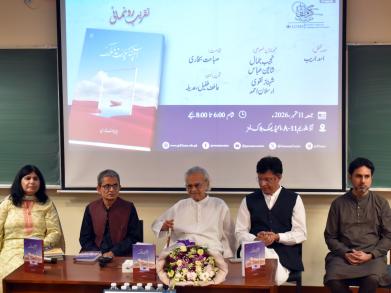
The Syed Babar Ali Fellowship and the Colloquium in the Study of Religion present
Philosophy in Islam’s Post-Classical Period — Similarities and Differences to Classical Islamic Philosophy
A talk by Frank Griffel (Oxford University)
In Western scholarship of the mid-19th century there emerged the view that the tradition of philosophy in Islam, which began with the translation of Greek texts into Arabic during the 8th and 9th centuries, found an abrupt end in the 12th century. Western scholars during most of the 19th and 20th centuries maintained that Ibn Rushd (Averroes), who died in 1198, was the last philosopher of Islam before this tradition was suppressed by a religious persecution whose most forceful exponent was al-Ghazālī (d. 1111). This picture, however, does not match the evidence that can be gathered about philosophical activity, particularly in South Asia. The dars-i niẓāmī curriculum of studies, which was applied in madrasas up to the 20th century, includes, for instance, a section on ḥikma where books of philosophy were studied that were authored by philosophers who were active after Ibn Rushd.
This talk will look at the continuity of the philosophical tradition in Islam and focus on activities during the so-called post-classical period, after the 12th century. How did post-classical philosophy emerge in the 12th and 13th centuries and how was it different from philosophy in Islam’s classical period? The talk will address misunderstandings about the history of philosophy in Islam, about al-Ghazālī’s role in it and about post-classical Islam.
Link: https://drive.google.com/drive/folders/1aSPv-ZqTMTQzCcwoit-ki5B8ZoFhlxRb?usp=sharing