

Dr. Arfa Sayeda Zehra: A Consolatory Celebration
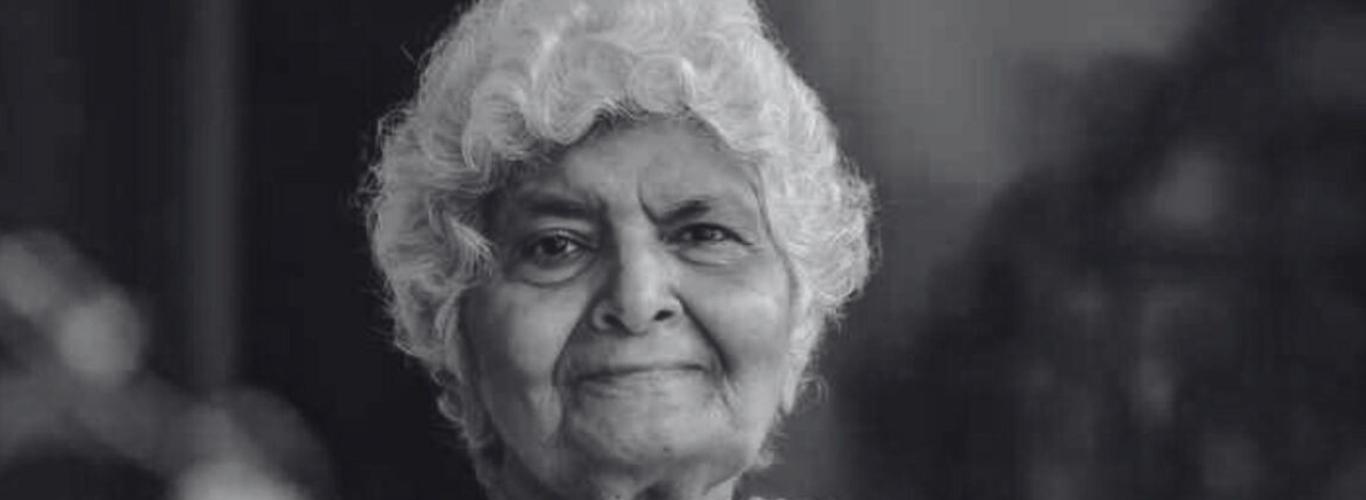



When Dr Arfa introduced her course, Urdu Literature I, to an enthusiastic class cohort of about 20+ “burger bachas” at LUMS, we were awestruck by Mirza Ghalib’s wizardry of words, only to become fixated on excavating their hidden truth and deeper meaning. She told us quite unequivocally that there will be no one answer, and that we were not expected to assert finalities of meaning, let alone endorse absolute truths. As part of the course evaluation, each student was expected to deliver a seminar at the end of the term and speak their thoughts for about two minutes. To speak in front of this formidable lady, this temple of language, literature and its lasting legacy. With her spectacles perched on the tip of her nose, her eyebrows raised in quiet calculation (was she impressed by our thoughts?), and a subtle smile as she would be making notes as we were granted the privilege to speak in her presence. Our seminar question on Mirza Ghalib’s course was: Ghalib: aik ‘aalam sab se alag. And I, the needless deep thinker and truth digger, just remembered the latter half.
“Aap kyaa puray ‘aalam pe likh kar le ayi hain?” The auditorium dared to chuckle at her witticism at the expense of my witlessness. And there in that moment, as I saw her intently and appreciatively listening to what I had to say, was a subtle yet sure epiphany that Dr Arfa and I would go a long way, and I upgraded myself towards becoming her discreet disciple.
The above shai’r was one of her absolute favourites from Ghalib. I fondly remember how she would recite it, entranced, fascinated by the contrapuntal radiif and the closing in of its qafiyah. She proved through her course, and her impeccable command on the man and his works, of how he was a stoic iconoclast, and not the jaded cynic he is reductively recalled as. And then, a devoted iconoclast herself, she made us recalibrate our understanding of Iqbal, Faiz, Mir Taqi Mir, Momin Khan Momin to mention a few. She also enabled us to see the notoriously dark and dismissively debauch works of Manto, Ismat Chughtai, Mumtaz Mufti and Intizar Hussain among others in a very different, if not didactic light. All the while trying to perhaps justify why Literature in Urdu is called “adab” and what it therefore means to discern, and to discern with delicate discretion: just that slight fine-tuning
of perspective, to see and feel things unconventionally, even if they were uncomfortable to see, and to constantly renew and review our perception of the world.
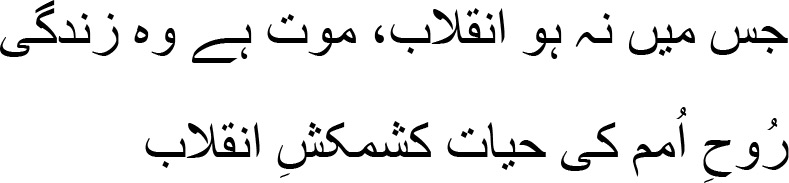
Another one of her staple favourites from one of my personal favourites from Iqbal, Masjid-e Qurtubah. My first dappling with Arabic began in Dr Arfa’s classroom when she discussed how the word “inqilaab” is derived from the word “qalb” or heart. And the qalb is constantly and kinetically alive due to its throb, its turbulence which sustains it. A simple course on Iqbal’s poetry became a concurrent study and masterclass in philosophy, religion, art, social sciences, personal faith, public disillusionment, Arabic, history and politics all intersecting, with Dr Arfa as the origamist.
Majoring in Social Sciences (as Humanities wasn’t offered as a streamlined degree 20+ years ago at LUMS), I chose to specialize in Comparative Literature for which I decided to undertake my thesis research on the comparative analysis of the Urdu ghazal and the English sonnet. My great fortune that Dr Arfa agreed to be my supervisor: she would direct, never dictate, and listen with an eagerness that would always renew my confidence and commitment. And for me, a 20 year old, to have a towering pyramid of knowledge and experience as my cheerleader was nothing short of benediction, for which I will always be deeply grateful. She urged me to present my paper at the All-Pakistan Music Conference which was led by Dr Ghazala Irfan, with Dr Arfa reciting the selected ghazals, and my former professor, Ms Shiasta Sirajuddin who offered to read the chosen sonnets.
The last time I was fortunate to meet Dr Arfa was ironically the last recital of Zia Mohyuddin Sb, after which he shortly passed away. I remember her in her maroon long coat, felt woollen hat sartorially slanted, and she introduced me to Zia Sb as one of her precious students: there can be no greater prize, no deeper dedication, yet no harder loss.
The entire nation moaned her recent passing. The last of the formidable and the finest, the bold and the brightest. Dr Arfa will always remain an ustad, a mentor, a friend, to whom I would always send a message every year on Teachers’ Day and she would always reply. She has touched anyone and everyone who had the pleasure and privilege of knowing her. She will be celebrated for her ability to enthrall and enrich, and her contribution will remain unforgettable.

As her student, I can only choose to serenade her legacy through my own teaching practice, upon which she has left an indelible mark, for which any tribute would only be a paltry cathartic relief.
- Hajrah Khan
26 November 2025